Please note, this is my personal experience of living with Ehlers Danlos Syndrome, the treatments and path to diagnosis and should therefore not be taken as medical advice. I am aware that some complaints are only indirect EDS symptoms but these also contribute to the overall picture and my experience with the condition, EDS.


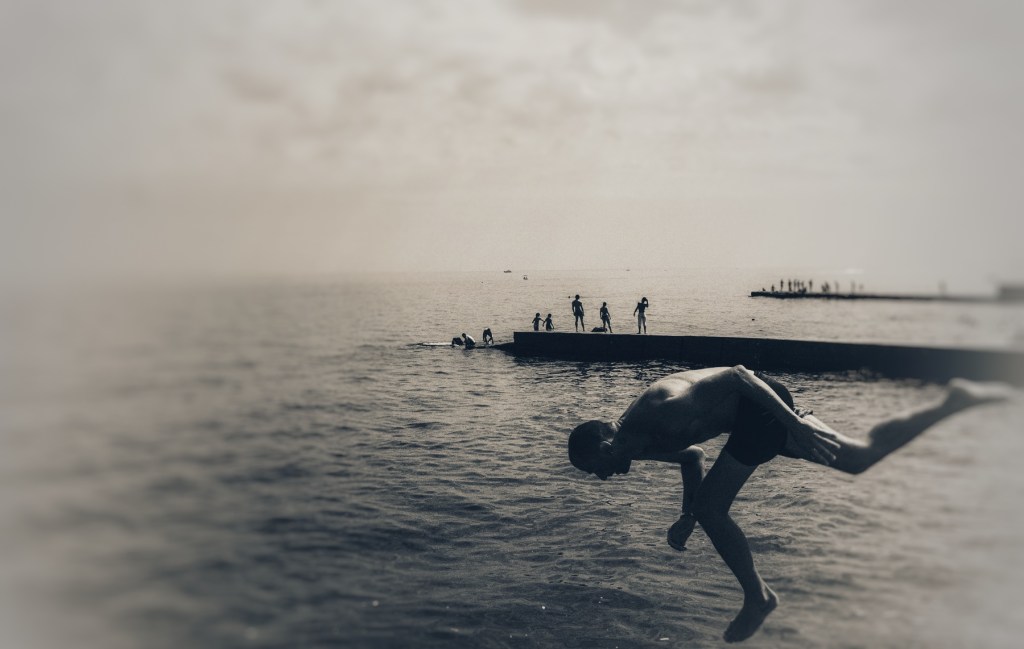
As much as we look forward to it as a child, becoming an adult and independent is a dive into the deep end. Moments of being able to fight whole world alternate with holding on to and longing for the carefree child that still lives inside us. By taking control of my life, I also hoped to gain control of my body, and I succeeded, if only temporarily.
As my body became stronger, my condition improved. I could plan the things I did myself and do them at my own pace. I could avoid things without having to account for them to anyone. My life improved through the interaction of a strong body, which I increasingly understood and could trust, and the knowledge that I could decide for myself what, when and how I did the things I had to do. This gave me peace, while my work, which was physically demanding, gave my body the exercise it needed.
Mentally, things were also getting better. The stressful home situation was behind me and I could look to the future. The shameful situations from my teenage years, the body that I did not understand and that had often let me down, I now could repress and forget. They became peculiarities instead of a serious condition. Driven by the desire to be normal, to have a normal future, I repressed my fatigue, my stiffness and my bladder issues.
Adapting movements to the strength and pace that my body could handle was tiring, but at first I did not see that anything was wrong, I thought it was due to my condition and lack of doing sports. EDS makes me feel much older than I am, but even if you feel 40 when you are actually 20, you can still function perfectly well. Of course, I did not know what a healthy body felt like at the time, but I was amazed to see the strength that my peers had. However, the signals that my body gave were too diverse to see a pattern in them. This meant that while working I could effortlessly lift heavy stones or dig a hole in the garden, but pushing a heavy wheelbarrow was almost impossible.
EDS is unpredictable and follows no logic.
After a few years, the balance between movement and rest became increasingly difficult to maintain. Fine motor movements became annoying and painful. Long-term movement had to be done with a certain force and at a certain pace, if I didn’t do that way I was exhausted very quickly. Walking too fast or too slow, or cycling too fast or too slow, was exhausting and painful. After rest, it took longer and longer to get up without pain, to walk. Slowly, the next phase of EDS began.
 Living with Ehlers Danlos Syndrome